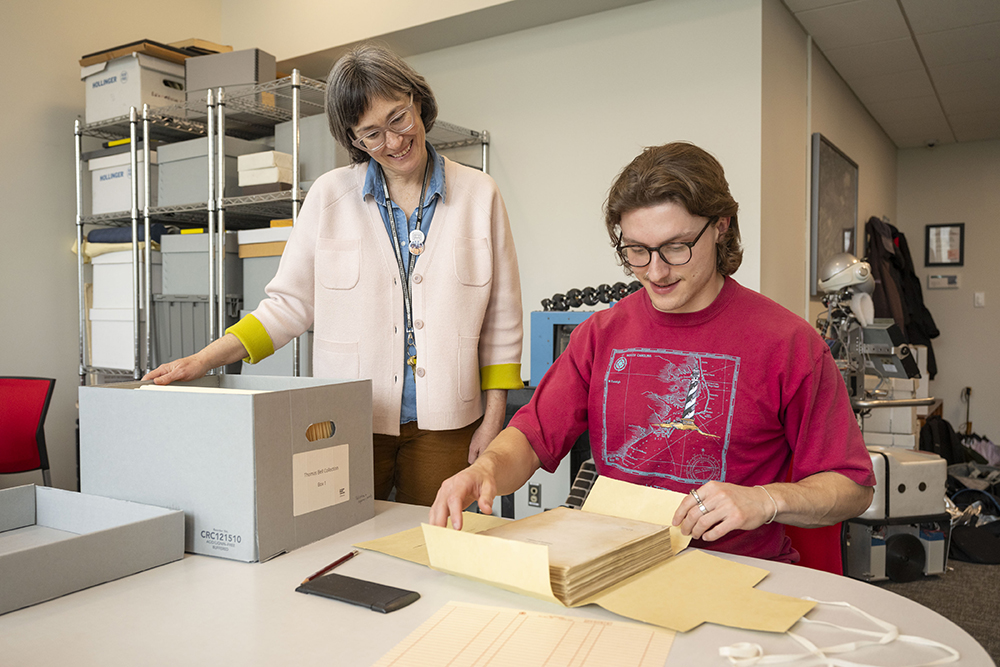
Through the Carnegie Mellon University Archives, CMU students with a passion for primary sources and collective memory can dive into the intellectual, cultural, and administrative history of the university, exploring the past and investigating how it informs the present moment. We checked in with 2024 Dietrich College graduate Nicholas Mlakar, who worked as a student assistant in the Archives, to see where that passion has taken him post-graduation.
Q: Share a little about how you interacted with the Archives during your time at CMU. How did you first get involved? What were you most interested in?
A: I first came in contact with the Archives during the summer between my sophomore and junior years (2022). I had become interested in exploring the history of activism at CMU and was fortunate to receive a grant from the Center for Shared Prosperity to spend the summer digging into this subject. Naturally, this project led me right into the Archives. This was when I first met Crystal Johnson, who was a huge help throughout the process — one I undertook with no formal training in archival research.
After a summer spent combing through the Archives’ collections and writing about what I found (“Protesters in Plaid”), I was thrilled to see that they were hiring a student assistant that fall. Fortunately, I got the job and was able to spend the next two years learning what it means to be an archivist. Working alongside Crystal, Emily Davis, and Kathleen Donahoe, I had the opportunity to play a part in every step in the archival process, from accession to processing to publication.
My experiences in the Archives are one of the defining features of my time at CMU. The academic achievements I’m most proud of — including my senior honors thesis — were all inspired by sources I first encountered there. It’s also where I rediscovered my love for history, which I ultimately ended up double-majoring in.
Q: The Archives collects, preserves, and provides access to materials of the university that have lasting historical value, reflecting the diverse experiences and contributions of the CMU community. How does this mission enrich the broader CMU student experience?
A: For all the benefits that CMU’s fast-paced and forward-focused culture has, I think it can lead to an alienation from what’s come before. The intense workload that many students undertake while at CMU can further exacerbate this disconnect. But the Archives is the perfect counterbalance to this force. It is a tether to the past that offers all members of the CMU community the ability to contextualize themselves and their experiences within the 125 years of the university's history.
Q: What’s the most interesting or unexpected thing you uncovered in the Archives? How did you find it? Why did it catch your attention?
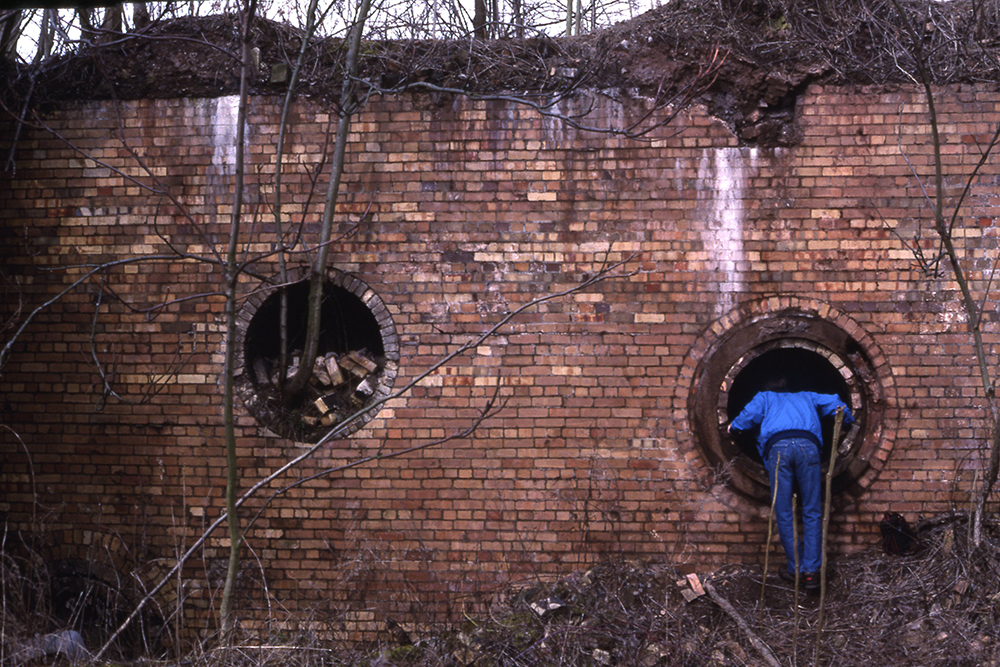
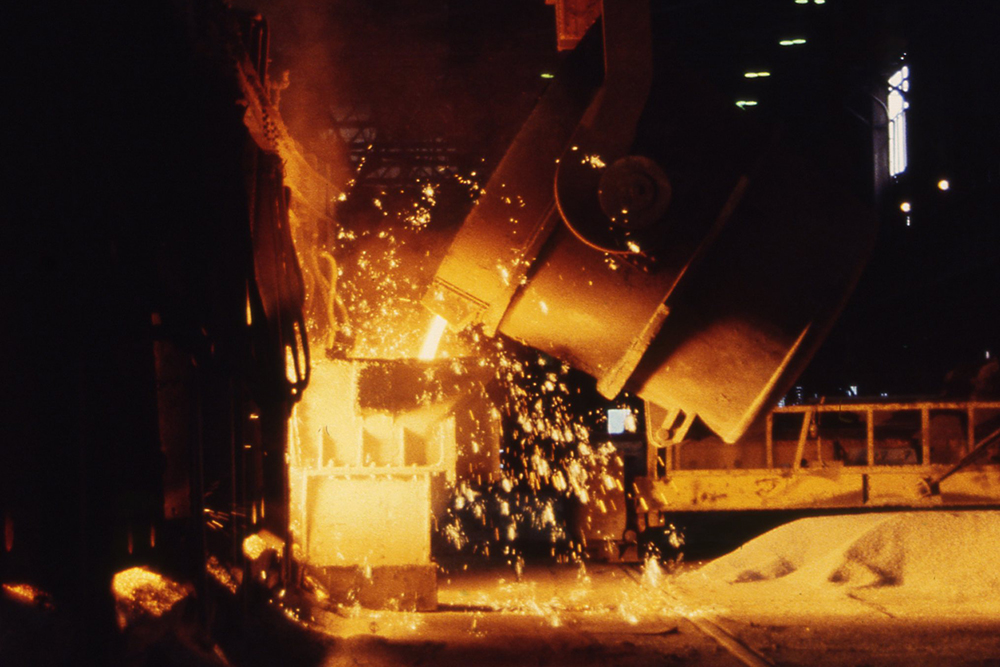
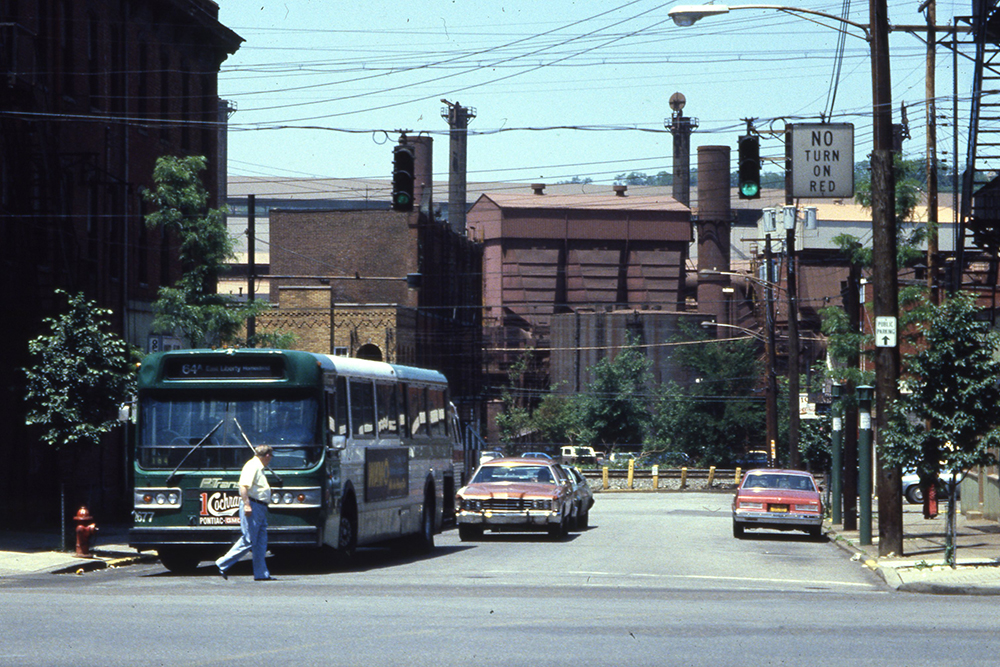
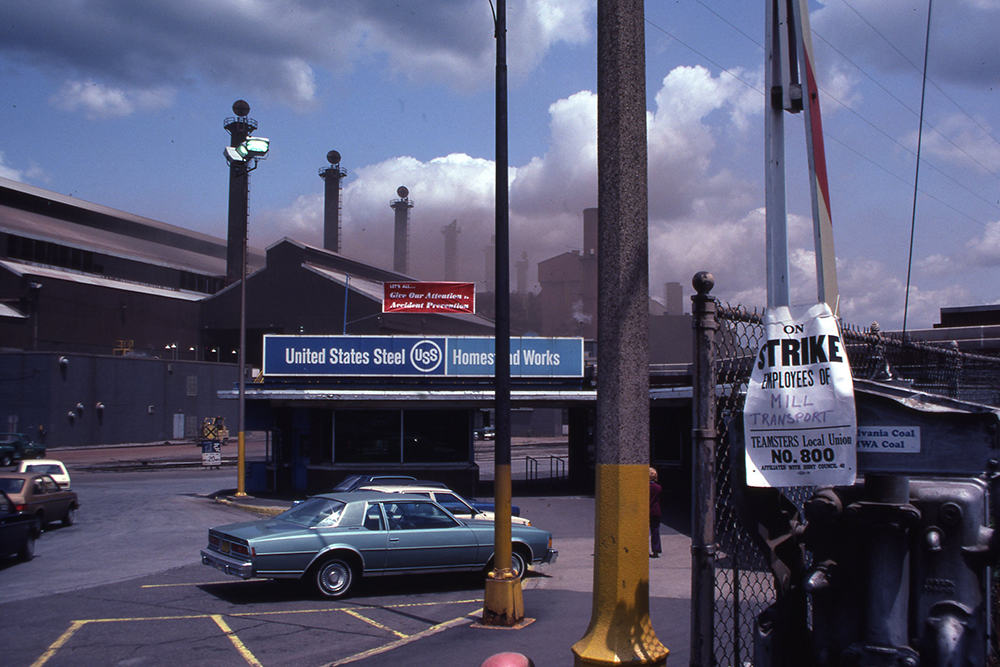
A: I had the opportunity to process the collections of a pair of former CMU professors, David Demarest and Eugene Levy. They were close friends who shared a love for the industrial landscape of Southwest Pennsylvania and the people who built it. Their passion — which took them on walks almost every weekend in some new corner of the region — was palpable even decades later as I made my way through their materials. Ultimately, I was inspired to follow in their footsteps and write my senior honors thesis about two of the neighborhoods (Braddock and Homestead) they frequented.
Q: Tell us about your time since you’ve graduated from CMU. What are you doing now, and in what ways did your work with the Archives help prepare you for success?
A: I’m now working as a writer at a content marketing agency, Compound Content Studio. My time in the Archives helped me develop the research and writing skills that I use every day.
I also continue to be deeply passionate about history, something the Archives helped me nurture. I hope to work on more original history research in the future, during which I will certainly draw on the lessons I learned as a student assistant.